Restriction Endonucleases
This post was published 7 years ago. Download links are most likely obsolete. If that's the case, try asking the uploader to re-upload.
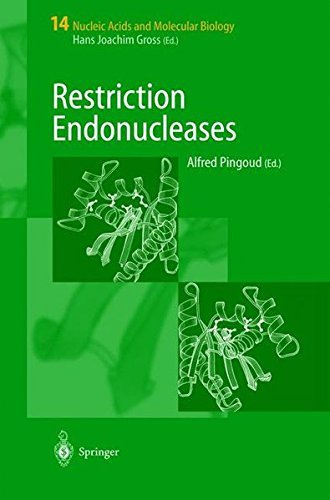
English | PDF | 2004 | 460 Pages | ISBN: 3540205020 | 13.18 MB
Restriction enzymes are highly specific nucleases which occur ubiquitously among prokaryotic organisms, where they serve to protect bacterial cells against foreign DNA. Many different types of restriction enzymes are known, among them multi-subunit enzymes which depend on ATP or GTP hydrolysis for target site location. The best known representatives, the orthodox type II restriction endonucleases, are homodimers which recognize palindromic sequences, 4 to 8 base pairs in length, and cleave the DNA within or immediately adjacent to the recognition site. In addition to their important biological role (up to 10 % of the genomes of prokaryotic organisms code for restriction/modification systems!), they are among the most important enzymes used for the analysis and recombination of DNA. In addition, they are model systems for the study of protein-nucleic acids interactions and, because of their ubiquitous occurence, also for the understanding of the mechanisms of evolution.
Quick check before we show the links
Helps us keep automated scrapers from hammering the filehosts.