The Population Paradox : How AI, Automation, and Fewer Humans Will Redesign the Global Economy
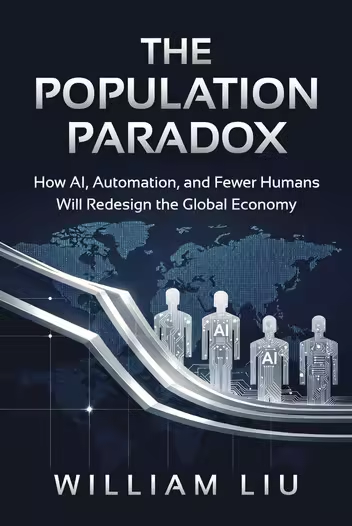
2026 | ISBN: 9798233866227 | English | 200 pages | True EPUB | 319 KB
For centuries, economic strength followed a simple rule: more people meant more growth. More workers, more consumers, more output. That rule is breaking.
Across the world, populations are aging and shrinking, yet economic systems are not collapsing the way traditional models predicted. Instead, artificial intelligence and automation are stepping in to replace human scale with machine scale. Output, coordination, and control are increasingly driven by systems, not labor. The result is a paradox at the center of modern economics: fewer humans, yet more concentrated power.
The Population Paradox examines how AI and automation are redesigning the global economy in an era of demographic decline. It explains why large populations are becoming liabilities rather than advantages, how smaller societies can remain productive and competitive, and why future growth will depend less on workforce size and more on technological leverage. From manufacturing and logistics to finance, governance, and inequality, the book traces how machine-driven systems are reshaping incentives, markets, and global hierarchies.
This is not a book about demographic panic. It is an analysis of structural transformation. Written for readers who want to understand where economic power is actually moving, The Population Paradox reveals why the next global economy will not be built on population growth — but on automation, intelligence, and control.
Quick check before we show the links
Helps us keep automated scrapers from hammering the filehosts.