Peri-urban Agriculture and Sustainability
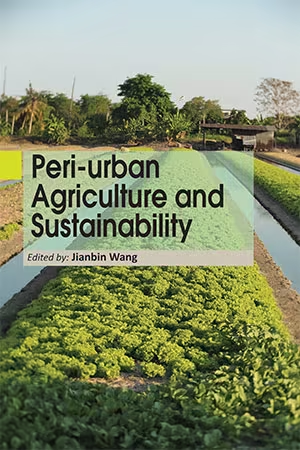
Jianbin Wang | 2023 | ISBN: 1682518949 | English | 304 pages | True PDF | 19 MB
Urban agriculture (UA) is a dynamic concept that comprises a variety of livelihood systems ranging from subsistence production and processing at the household level to more commercialized agriculture. It takes place in different locations and under varying socioeconomic conditions and political regimes. The diversity of UA is one of its main attributes, as it can be adapted to a wide range of urban situations and to the needs of diverse stakeholders. UA or urban and peri-urban agriculture (UPA) can make important contribution. In contemporary societies, PUA has become a very specific feature of multifunctional agriculture, which makes an important contribution not only to the sustainable development of peri-urban areas, but also to the reinforcement of urban-rural relationships. Far from being a transitional condition of semi-abandoned land destined to be incorporated in the process of urban growth, professional agriculture in the outskirts of metropolitan areas has progressively achieved a status of unique and sustainable activity thanks to the development of bilateral relationships with urban dwellers and institutions. Parallel to the ongoing process of the development and the enhancement of a complex and articulated agri-food system, PUA has specialized, in many cases, in supplying specific products and services to cities and citizens, addressing a growing demand for a mix of public and private goods and services which can be jointly supplied with the primary agricultural products, making primary activity more sustainable in all of its economic, environmental, and social dimensions. The growing demand of such goods and services, such as social agriculture, educational farms, and recreational areas, supplied together with good-quality, healthy food directly provided to citizens has become a winning strategy for peri-urban farms not only to survive and reverse the downward trend toward decline and abandonment, but even to diversify their sources of income and finally grow. At the same time, the land involved is usually kept from further urbanization; while this can raise the level of social unrest and develop specific political interests, it secures the sustainable use of areas which are quite fragile from the environmental, economic, and social points of view.
There is a general agreement on the role that peri-urban agriculture can play in achieving sustainable cities. This role is particularly crucial in the Alps, which are now the scene of relevant changes, involving above all cities that are embracing metropolitan functions. Food production on the urban-rural fringe is under pressure due to competing land uses. This book is intended to discuss the potential to improve resilience for urban-rural regions by enhancing food production as part of multifunctional land use. The book discusses the resilience potential of connecting urban-rural regions and re-coupling agriculture to regional food production. The book is relevant for students interested in exploring the interface between seemingly rural agricultural practices, and urban societies and space.
Quick check before we show the links
Helps us keep automated scrapers from hammering the filehosts.