Quinoa: Improvement and Sustainable Production by Lena Romo
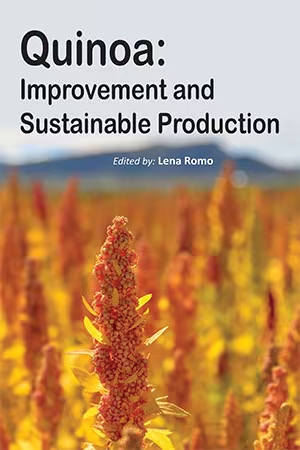
Lena Romo | 2023 | ISBN: 1682518892 | English | 316 pages | True PDF | 15 MB
Quinoa is native to the Andean region and has attracted a global growing interest due its unique nutritional value. The protein content of quinoa grains is higher than other cereals while it has better distribution of essential amino acids. It can be used as an alternative to milk proteins. Additionally, quinoa contains a high amount of essential fatty acids, minerals, vitamins, dietary fibers, and carbohydrates with beneficial hypoglycemic effects while being gluten-free. Since 2010, as a result of the increased attention to quinoa as a highly nutritious crop and increased international demand, the acreage and production of quinoa expanded rapidly. Global demand and price increases create opportunities for smallholder farmers but also concerns on the environmental impacts of quinoa acreage expansion and the changing quinoa production practices of smallholder farmers. Quinoa maintains productivity on rather poor soils and under conditions of water shortage and high salinity. Moreover, quinoa seeds are an exceptionally nutritious food source, owing to their high protein content with all essential amino acids, lack of gluten, and high content of several minerals, e.g., Ca, Mg, Fe, and health-promoting compounds such as flavonoids. Quinoa has a vast genetic diversity resulting from its fragmented and localized production over the centuries in the Andean region, from Ecuador to southern Chile, and from sea level to the altiplano.
The book focuses in particular on the evolving role of quinoa in providing increased food security to smallholder farmers and communities around the globe. This book will be of interest to quinoa researchers, producers, crop scientists, agronomists, and plant geneticists, as well as advanced students working with this important grain. Climate change is rapidly degrading the conditions of crop production. For instance, increasing salinization and aridity is forecasted to increase in most parts of the world. As a consequence, new stress-tolerant species and genotypes must be identified and used for future agriculture. Stress-tolerant species exist but are actually underutilized and neglected. Many stress-tolerant species are indeed traditional crops that are only cultivated by farmers at a local scale. Those species have a high biodiversity value. Besides, the human population will probably reach nine billion within coming decades. To keep pace with population growth, food production must increase dramatically despite the limited availability of cultivable land and water. This book sheds light on how traditional quinoa processing and products evolved and are being adopted into novel food processing and modern food products, as well as noting the potential of side stream processing of quinoa by-products in various industrial sectors. Furthermore, this book moves beyond the technological aspects of quinoa production by addressing the socio-economic and environmental challenges of its production, consumption, and marketizations to reflect a holistic view of promoting the production and consumption of quinoa.
Quick check before we show the links
Helps us keep automated scrapers from hammering the filehosts.