Discovery Science TV RSS Reupload Requests 41
-
HDTV | 1920x1080 | .MP4/AVC @ 5200 Kbps | 2x~44min | 3.36 GiB
Audio: English AAC 160 kbps, 2 channels | Subs: English
Genre: DocumentaryEarth's climate is changing - understanding how has become one of the biggest scientific projects ever undertaken.
-
Language: English
2 h 24 min | 4.32 GiB | 4 330 kb/s | 1920x1080 | AAC @ 160 kb/s, 2 channels | mp4
Number of Parts: 3
Genre:DocumentaryAround the world, a group of scientists are risking their lives to come face-to-face with the most fearsome sharks in the ocean. From researchers in Guadalupe attempting to attach a camera to a great white, to a dedicated 'shark lab' in the Bahamas investigating shark migration and overall intelligence, join a thrilling journey into the hidden habitats of these premier marine predators.
-
Language: English
2 h 56 min | 4.13 GiB | 3 358 kb/s | 1280x720 | AAC @ 160 kb/s, 2 channels | mp4
Number of Parts: 3
Genre: DocumentaryLondon's Victorian sewer network is at bursting point. Its tunnels are regularly pushed past their limit, and each week the equivalent of 300 Olympic swimming pools full of raw sewage is released into the Thames, totalling 39 million tonnes every year. Now a huge engineering project is underway to massively expand the capital's capacity to deal with its own waste.
-
Language: English
51 min 58 s | 572 MiB | 1 537 kb/s | 960x540 | AAC @ 64.0 kb/s | mkv
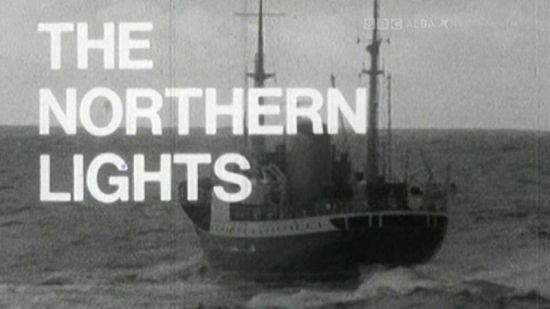
Genre:DocumentaryThe Northern Lights was first broadcast in 1969 and followed the Pole Star, a Northern Lighthouse Board relief vessel and her crew as she serviced some of Scotland's most remote and inaccessible lighthouses. Although the Northern Lighthouse Board had begun the process of automation by then, several manned lighthouses remained and the crew of the Pole Star had the crucial role of taking relief crews and supplies to these lighthouses. In this programme, the Pole Star visits the Sule Skerry and North Ronaldsay Lighthouses in Orkney as well as the mysterious Flannan Isles Lighthouse where three lighthouse keepers disappeared in mysterious circumstances in 1900.
-
Multi-Format
1080P (1)
-
2.93 GiB MKV AACGo to Download
Language: English
58 min 0 s | 1.12 GiB | 2 773 kb/s | 1280x720 | AAC @ 317 kb/s | mp4
Genre: DocumentaryThis two-part special presented by Hannah Fry shows that when it comes to the universe, size really does matter. Hannah takes the audience into a thought experiment where the size of everything can be changed to reveal why things are the size they are.
-
-

HDTV | 1916x1080 | .MKV/AVC @ 5102 Kbps | 27 min 59 s | 1.09 GiB
Audio: English AC3 384 kbps, 2 channels | Subs: None
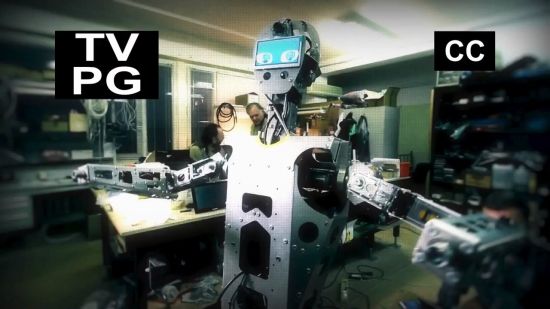
Genre: DocumentaryIn the field of elderly care, the Japanese government is promoting the introduction of robots capable of communicating. These "communication robots" have the potential to transform elderly care in Japan, where the population is rapidly aging. In a nationwide experiment, researchers found the robots encourage seniors to stay active, and help prevent feelings of isolation. The experiment also showed how communication robots can help caregivers monitor seniors and meet their needs.
-

HDTV | 1280x720 | .MKV/AVC @ 3094 Kbps | 49 min 0 s | 1.21 GiB
Audio: English AC3 384 kbps, 2 channels | Subs: None
Genre: DocumentaryAfter an era of growth, Japan's population has begun to plummet. Japan has lost 10 million members of the working generation over the past 2 decades. Retirees are plugging the gap, but they work in tough conditions and often fall prey to accidents. Foreigners are another pillar of the workforce. One local municipality is even committed to attracting overseas labor as a way to survive. We look at Japan's struggle to cope with its vanishing workforce and try to explore solutions.
-
Language: English
2 h 57 min | 3.71 GiB | 2 910 kb/s | 1280x720 | AAC @ 126 kb/s | mkv
Number Of Parts: 3
Genre:DocumentaryDan Snow, Lucy Cooke and Niall Strawson uncover historical, geological and wildlife treasures live from the Jurassic Coast in Dorset. From crabs and bats to owls and cormorants, this episode investigates how much wildlife is living on the beach. The strandline's hidden world of sandhoppers and seaweed is magnified, while specialist underwater cameras give a view of sharks and crabs lying deep in the ocean. Dan Snow examines the royal origin of beach huts and sees how varied their use is in modern-day Britain. Lucy Cooke demonstrates how a humble mollusc helps to train racehorses in Devon. Niall Strawson is in charge of the Discovery Centre, where a panel of experts examine and assess the significance of beach finds from all over the country. And the creation of the unique geological make-up of the Jurassic Coast is seen through the medium of cake! Earth scientist Dr Anjana Khatwa talks Niall through the layers as seen from the sea.
-
Language: English
45 min 20 s | 562 MiB | 1 732 kb/s | 960x540 | AAC @ 192 kb/s | mp4
Genre:DocumentaryAn exploration into the design and construction of the original ‘jumbo jet’, the Boeing 747. Engineers and pilots recall the challenges they faced and dramatic stories of the plane’s fledgling flights.
-
Language: English
29 min 1 s | 329 MiB | 1 586 kb/s | 1280x720 | AAC @ 132 kb/s | mkv
Genre:DocumentaryIn February 2018, news broke that astronomers had seen the cosmic dawn - the moment when stars first formed, flooding the universe with light. What's remarkable is that this incredible event was discovered by an instrument the size of a ping-pong table in a remote corner of Western Australia.
Chris Lintott travels to the Murchison Radio-astronomy Observatory to find out how they did it and what else the extraordinary radio telescopes there can tell us about the universe.
-
Language: English
59 min 6 s | 1.39 GiB | 3 374 kb/s | 1280x720 | AAC @ 160 kb/s | mp4
Genre:DocumentaryWhat is it like to be young and find out you have got cancer? What you will find out in this film may surprise you. This film, narrated by actor and comedian Jack Whitehall, tells 11 inspirational stories, revealing how a range of young people have dealt with their cancer diagnosis and the treatment process. We hear, primarily in their own words, about their fears, their hopes and their experiences - affirming the view that 'the best therapist for a teenager with cancer... is another teenager with cancer.'
-
Language: English
42 min 28 s | 1.16 GiB | 3 908 kb/s | 1280x720 | AAC @ 127 kb/s | mkv
Genre:DocumentaryWhether Attila the Hun was responsible for the fall of the Roman Empire
-
Language: English
43 min 14 s | 560 MiB | 1 810 kb/s | 704x400 | AAC @ 165 kb/s | mp4
Genre:DocumentaryRecently-discovered color footage tells the story of an extraordinary Munich weekend when Adolf Hitler and nearly the entire Nazi leadership attended a three-day national cultural festival - including concerts, dancing, exhibitions and a five-mile-long parade - titled "2,000 Years of German Culture".
The film was shot in July 1939, just six weeks before the Second World War began, by an amateur film buff who wangled a special pass to shoot the event in close-up on color 16-millimeter Kodachrome. It was first shown only to the film maker's family, then hidden in the family cellar, where it lay for many years before one of his sons retrieved it. English film makers Luke Holland and Paul Yule assembled an audience of elderly Germans, framing them watching themselves in the 1939 footage and reminiscing about their experiences. Among them were sons of the unofficial cameraman who shot the 16-millimeter film and the daughter of the publisher of Hitler's Mein Kampf, who in deference to Hitler's wish for "privacy" on frequent visits to the publisher's home never said "Heil, Mein Führer", but always "Good Morning, Mr. Hitler." -
Multi-Format
Other (1)
-
515 MiB MKV AACGo to Download
Language: English
1 h 23 min | 1.57 GiB | 2 682 kb/s | 1280x720 | AC-3 @ 384 kb/s | mkv
Genre:Documentary -
-
Language: English
6 h 24 min | 9.01 GiB | 3 337 kb/s | 1920x1080 | AAC @ 160 kb/s | mp4
Number of Parts: 8
Genre:DocumentaryEmbark on a journey into the world's most unforgiving arctic zones, where land and ice are inseparably joined. Swim through the mammoth Mackenzie Delta, or explore the great tundra of Nunavik. These hostile regions yield little for the hardy wildlife and local Inuit tribes that wait patiently for an all-too-brief summer.
-
Language: English
1 h 29 min | 729 MiB | 1 144 kb/s | 704x396 | AAC @ 317 kb/s | mp4
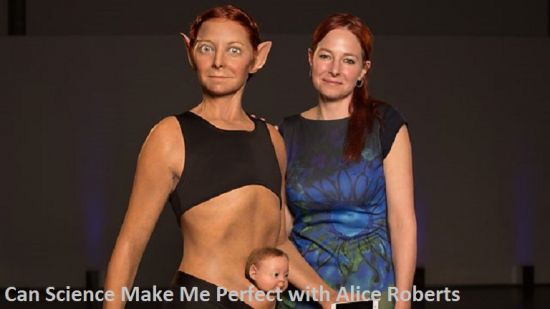
Genre:DocumentaryAnatomist Alice Roberts embarks on an audacious scientific stunt – to rebuild her own body from scratch, editing out errors left behind by evolution; to create the perfect body. With the help of one of the world’s best virtual sculptors, Scott Eaton, and top SFX model maker Sangeet Prabhaker, Alice creates a life-size model of the perfect human body, to be revealed in front of 150 people at London’s Science Museum.
Through natural selection, animals have evolved incredible biological designs, from supersharp senses to superpowered limbs. Alice is on a hunt to find the very best designs the natural world has to offer and use them to fix the flaws in our own human anatomy. -

Language: English
28 min 0 s | 171 MiB | 855 kb/s | 720x404 | AAC @ | mkv
Genre:DocumentaryOn this program, you will encounter leading-edge researchers and their work… including world-renowned researchers who will join us in the studio. It’s the perfect way to keep tabs on what’s happening across a broad range of science and technology fields in Japan!
The program is hosted by a rotating lineup of “Science Watchers” along with Science Navigator Rena Yamada. Science Watchers are primarily university professors with expertise ranging from cultural anthropology to neuroscience. Each will appear on two broadcasts, bringing the perspective of their various fields to timely topics. You won’t want to miss our Science Watchers’ enlightening explanations of emerging developments in science and technology! -
Multi-Format
Other (1)
-
342 MiB MKV AACGo to Download
Language: English
42 min 29 s | 1.01 GiB | 3 399 kb/s | 1280x720 | AAC @ 127 kb/s | mkv
Genre:DocumentaryNew discoveries are changing everything known about black holes, and using the latest science and technology, experts reveal secrets to the mysteries behind these strange and deadly places.
-
-
Language: English
29 min 9 s | 531 MiB | 2 548 kb/s | 1280x720 | AAC @ | mp4
Genre: DocumentaryNasa’s Juno spacecraft is currently making its 13th orbit of Jupiter on one of the most ambitious and risky space missions ever undertaken. The astonishing images it has captured are not just visually stunning, they also deliver spectacular scientific insight, revolutionising our ideas about Jupiter. Maggie Aderin-Pocock explores these remarkable discoveries, from a new understanding of Jupiter’s core and formation to revelations about how deep its raging storms penetrate the planet’s mysterious interior.
-
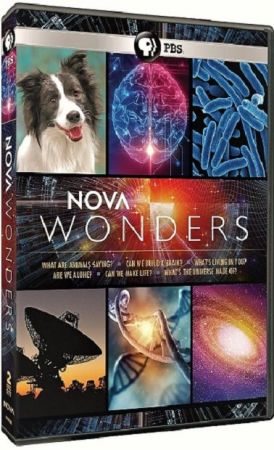
HDTV | 1280x720 | .MP4/AVC @ 3200 Kbps | 52 min 51 s | 1.24 GiB
Audio: English AAC 160 kbps, 2 channels | Subs: English
Genre: DocumentaryThe universe is hiding something. In fact, it is hiding a lot. Everything we experience on Earth, the stars and galaxies we see in the cosmos—all the “normal” matter and energy that we understand—make up only 5% of the known universe. The other 95% is made up of two mysterious components: “dark matter” and “dark energy.” We can’t see them, but we know they’re there. And what’s more—these two shadowy ingredients are locked in an epic battle to control the very fate of the universe. Now, scientists are trying to shed light on the so-called “dark sector” as the latest generation of detectors rev up, and powerful telescopes peer deeper into space than ever before to observe how it behaves. Will the discoveries help reveal how galaxies formed? In the series finale, NOVA Wonders journeys to the stars and back to investigate what we know—and don’t know. Find out how scientists are discovering new secrets about the history of the universe, and why they’re predicting a shocking future.