How to Read Architectural Drawings: Beginner to Advance.

Published 4/2026
MP4 | Video: h264, 1920x1080 | Audio: AAC, 44.1 KHz, 2 Ch
Language: English | Duration: 3h 39m | Size: 2.6 GB
“Understand Floor Plans, Sections, Elevations, Symbols, Working Drawings Step by Step”— even if you have zero experience
What you'll learn
Understand what architectural drawings are and their role in real-world construction projects.
Identify and interpret different types of drawings in a complete drawing set.
Read and navigate drawing sheets, layouts, and drawing indexes professionally.
Understand line types, line weights, and standard architectural symbols.
Apply a step-by-step method to read and analyze floor plans confidently.
Interpret dimensions, scales, and spatial relationships in drawings.
Read and understand doors, windows, and opening schedules.
Analyze furniture layout plans for space planning and functionality.
Understand and interpret elevation drawings clearly
Read section drawings to visualize internal building details.
Understand detail drawings and how construction elements come together.
Learn the purpose and structure of working drawings used on-site
Gain a beginner-friendly understanding of structural drawings
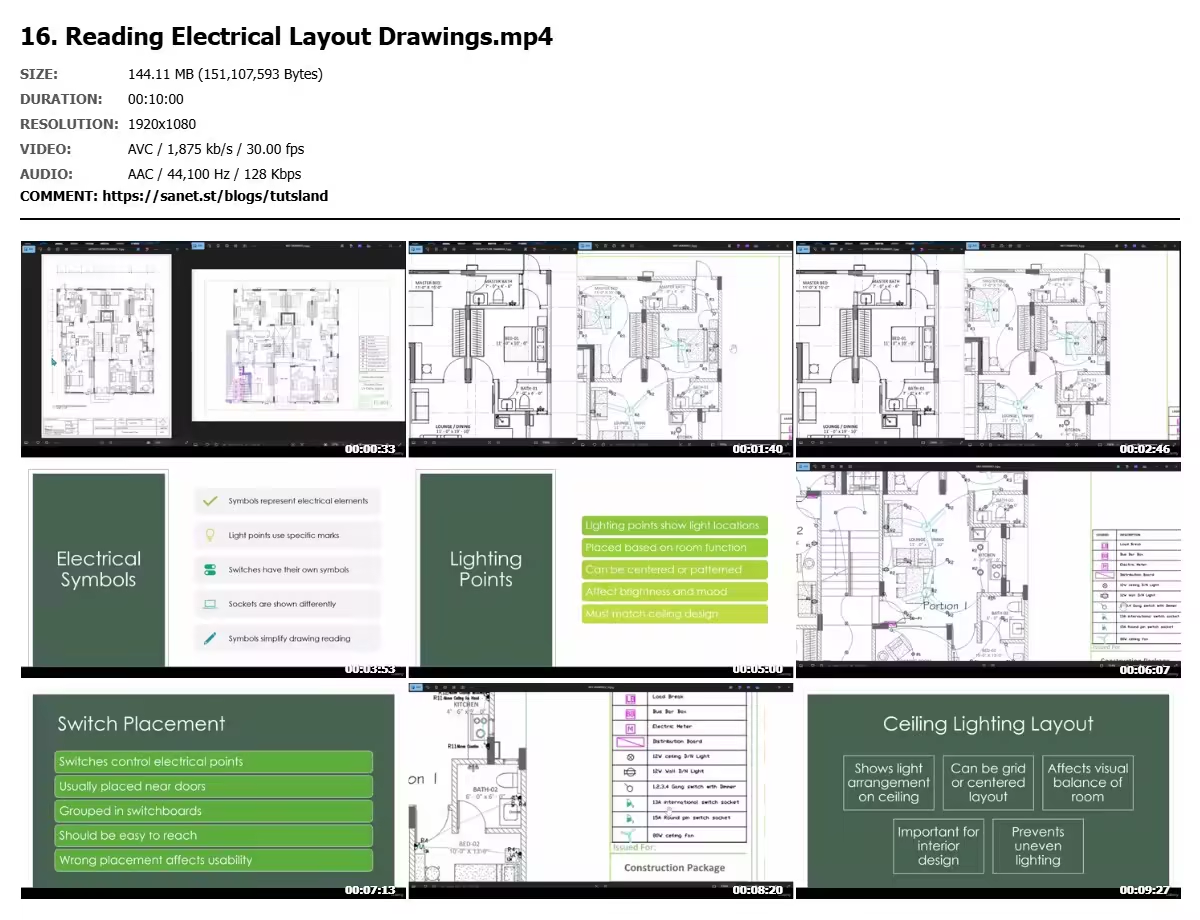
Read and interpret electrical layout drawings (lighting, switches, etc.)
Understand basic plumbing drawings and layout systems
Connect all drawing types to understand a complete project holistically
Avoid common mistakes beginners make when reading drawings
Build confidence to read real architectural and construction drawings independently
Requirements
No prior experience in architecture or drawing reading is required.
Basic understanding of buildings or construction is helpful but not necessary.
A willingness to learn and follow step-by-step explanations.
Access to a computer, laptop, tablet, or smartphone.
Ability to view PDF drawings or course materials.
Notebook or sketchbook for practicing (optional but recommended).
Basic knowledge of English to follow the lessons.
Description
Do architectural drawings look confusing to you?
You are not alone. Many students and beginners struggle to understand drawings because they don’t know where to start.
If you’ve ever looked at an architectural drawing and felt confused, overwhelmed, or unsure where to start—this course is designed for you. “How to Read Architectural Drawings Like a Pro (Step-by-Step for Beginners)” is a complete, practical guide that takes you from zero knowledge to confidently understanding professional drawing sets used in real-world projects.
This course focuses on solving one of the most common problems students, beginners, and even professionals face: understanding architectural drawings clearly and correctly. Instead of using complex theory or unnecessary jargon, you’ll learn through a structured, step-by-step approach that makes even the most technical drawings easy to read and interpret.
You will begin by understanding what architectural drawings are and why they are essential in the construction and design process. From there, you will explore the different types of drawings included in a complete drawing set, so you can see how everything connects together in a real project. You will learn how to navigate drawing sheets, understand layouts, and read drawing indexes like a professional.
The course then dives into the core fundamentals that most beginners struggle with, including line types, line weights, and architectural symbols. These are the building blocks of every drawing, and once you understand them, everything else becomes much easier.
A major focus of this course is helping you read floor plans step-by-step. You will learn a clear method that you can apply to any project, allowing you to understand spaces, layouts, dimensions, and relationships between different elements. You will also learn how to interpret doors, windows, openings, and furniture layouts, giving you a complete understanding of how a space is designed and used.
Beyond floor plans, you will gain the skills to read elevation drawings and section drawings, which are essential for visualizing the vertical and internal aspects of a building. You will also explore detail drawings to understand how construction elements come together in practice.
To give you a complete industry perspective, this course introduces working drawings and explains how they are used on-site. You will also get a beginner-friendly introduction to structural drawings, as well as electrical and plumbing layouts, so you can understand how different disciplines coordinate within a project.
By the end of this course, you will be able to confidently read and interpret complete architectural drawing sets, communicate more effectively in design and construction environments, and avoid common mistakes that beginners often make. Whether you are an architecture student, interior designer, engineer, contractor, or someone simply interested in learning this valuable skill, this course will give you the clarity and confidence you need.
This course is designed to be practical, easy to follow, and directly applicable to real-world scenarios, helping you build a strong foundation that you can use in your academic, professional, or freelance work.
Thank you.
Who this course is for
Beginners who want to learn how to read architectural drawings from scratch.
Architecture students who struggle to understand floor plans, sections, and elevations.
Interior design students and professionals who want to improve drawing interpretation skills.
Civil engineering students who need a basic understanding of architectural drawings.
Site engineers, supervisors, and contractors who work with construction drawings.
Freelancers and beginners looking to start a career in architecture or interior design.
Anyone involved in construction projects who wants to read drawings with confidence.
Professionals who want to refresh or strengthen their drawing reading skills
Quick check before we show the links
Helps us keep automated scrapers from hammering the filehosts.