How to Write Pythonic Loops
This post was published 4 years ago. Download links are most likely obsolete. If that's the case, try asking the uploader to re-upload.
MP4 | Video: h264, 1920x1080 | Audio: AAC, 44.1 KHz
Language: English | Size: 16.9 MB | Duration: 6 Lessons | 9m
One of the easiest ways to spot a developer who has a background in C-style languages and only recently picked up Python is to look at how they loop through a list. In this course, you’ll learn how to take a C-style (Java, PHP, C, C++) loop and turn it into the sort of loop a Python developer would write.
You can use these techniques to refactor your existing Python for loops and while loops in order to make them easier to read and more maintainable. You’ll learn how to use Python’s range(), xrange(), and enumerate() built-ins to refactor your loops and how to avoid having to keep track of loop indexes manually.
The main takeaways in this tutorial are that:
Writing C-style loops in Python is considered not Pythonic. Avoid managing loop indexes and stop conditions manually if possible.
Python’s for loops are really “for each” loops that can iterate over items from a container or sequence directly.
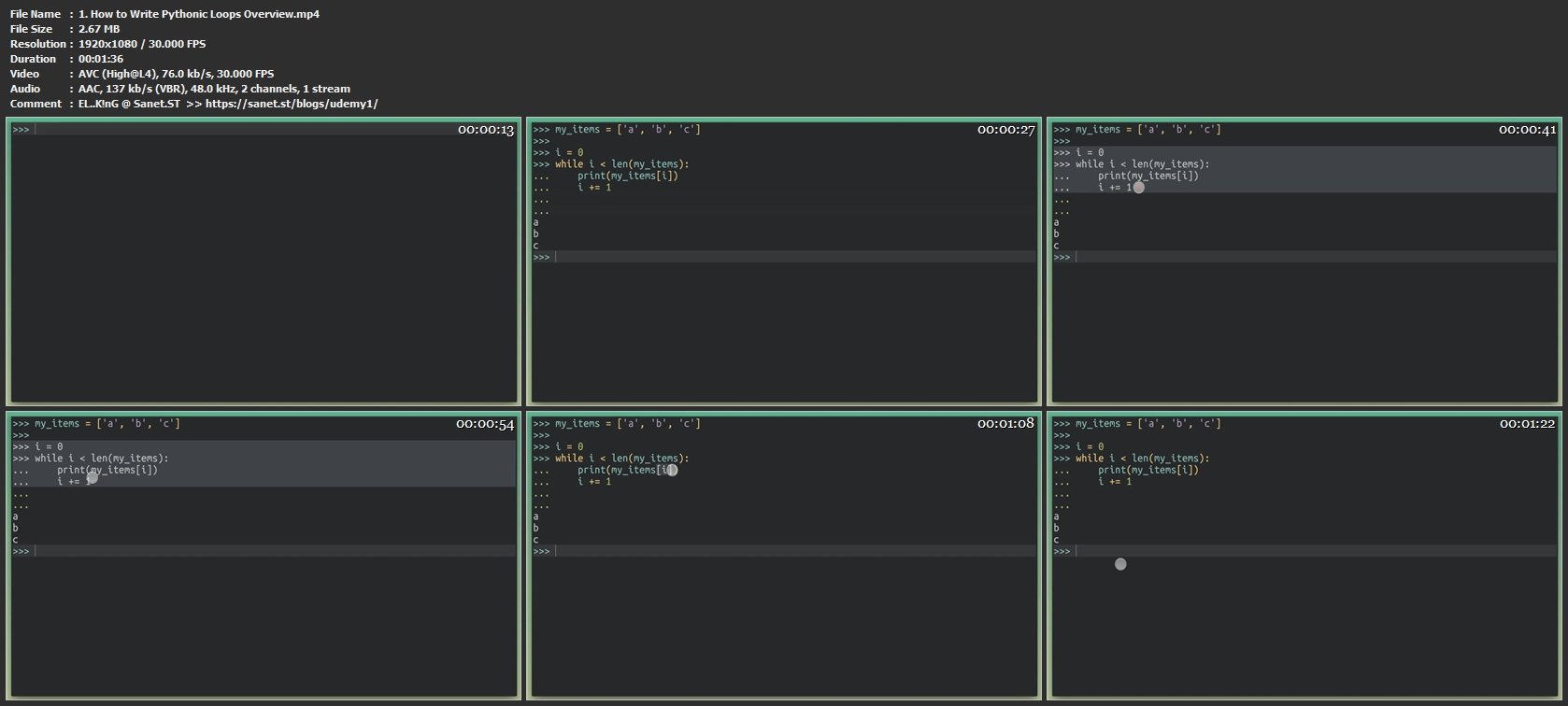
Screenshots
Homepage
Without You And Your Support We Can’t Continue
Thanks For Buying Premium From My Links For Support
Click >> Here & Visit My Blog Daily For More Udemy Tutorial. if You Need Update or Links Dead Don't Wait Just PM Me or Leave Comment at This Post
Quick check before we show the links
Helps us keep automated scrapers from hammering the filehosts.