Mastering Tarot: Symbolism, Psychology & Practical Reading

Published 2/2026
MP4 | Video: h264, 1920x1080 | Audio: AAC, 44.1 KHz, 2 Ch
Language: English | Duration: 2h 25m | Size: 4.49 GB
Systematic Tarot Analysis: Structure, Symbolism, and Advanced Interpretation Strategies
What you'll learn
Understand the historical development of tarot from playing cards to symbolic interpretative systems.
Identify and explain the meanings of all Major Arcana cards.
Interpret the symbolic structure and meanings of the Minor Arcana suits and court cards.
Analyze tarot imagery using symbolism, numerology, and elemental correspondences.
Compare different tarot systems such as Marseille, Rider–Waite–Smith, and Lenormand.
Apply structured tarot spreads for relationship, personal, and situational readings.
Develop techniques to connect multiple cards into coherent and logical interpretations.
Recognize archetypal patterns and psychological themes represented in tarot symbolism.
Perform tarot readings using both analytical and intuitive interpretative methods.
Understand ethical principles and responsible communication during tarot readings.
Requirements
No prior tarot knowledge is required. The course covers all fundamentals from beginner level.
Interest in symbolism, spirituality, psychology, or personal development is helpful but not mandatory.
Access to any tarot deck is recommended for practice exercises.
Willingness to observe visual details and symbolic imagery carefully.
Basic ability to follow structured lessons and complete practice exercises.
Notebook or journal for recording interpretations and practice readings is recommended.
Open mindset toward learning symbolic and interpretative systems.
No previous experience in divination or esoteric studies is necessary.
Basic reading comprehension skills to follow explanations and symbolism analysis.
Commitment to practice readings regularly to develop interpretation skills.
Description
This comprehensive course offers an in-depth exploration of tarot as a symbolic, historical, and interpretative system, designed to provide students with both theoretical knowledge and practical reading skills. Structured to guide learners from foundational concepts to advanced analytical techniques, the course examines tarot not merely as a set of cards, but as a complex visual language shaped by centuries of cultural, artistic, and philosophical development.
The course begins with a thorough examination of the historical evolution of tarot, tracing its origins from early European playing cards to its transformation into a symbolic and interpretative tool. Students will analyze the development of major tarot traditions, including the Tarot de Marseille, the Rider–Waite–Smith deck, and related systems such as Lenormand oracle cards, exploring their stylistic differences, symbolic frameworks, and historical contexts. Special attention is given to how social, religious, and intellectual movements influenced tarot imagery and interpretative traditions across different periods.
A central component of the course focuses on the structural architecture of tarot decks. Students will gain a detailed understanding of the Major Arcana and Minor Arcana, learning how each group contributes to the narrative and symbolic logic of tarot readings. The course explores numerical symbolism, elemental associations, archetypal imagery, and recurring thematic motifs that form the backbone of tarot interpretation. Learners will be guided through systematic methods of recognizing patterns, relationships between cards, and layered symbolic meanings.
The program also provides an extensive study of card symbolism, teaching students how to decode visual elements such as colors, figures, objects, gestures, and compositional structure. By understanding symbolic language and archetypal representation, students will develop the analytical skills necessary to construct coherent and nuanced interpretations. The course integrates perspectives from cultural history, mythology, and psychological symbolism, offering a multidimensional framework for understanding tarot imagery.
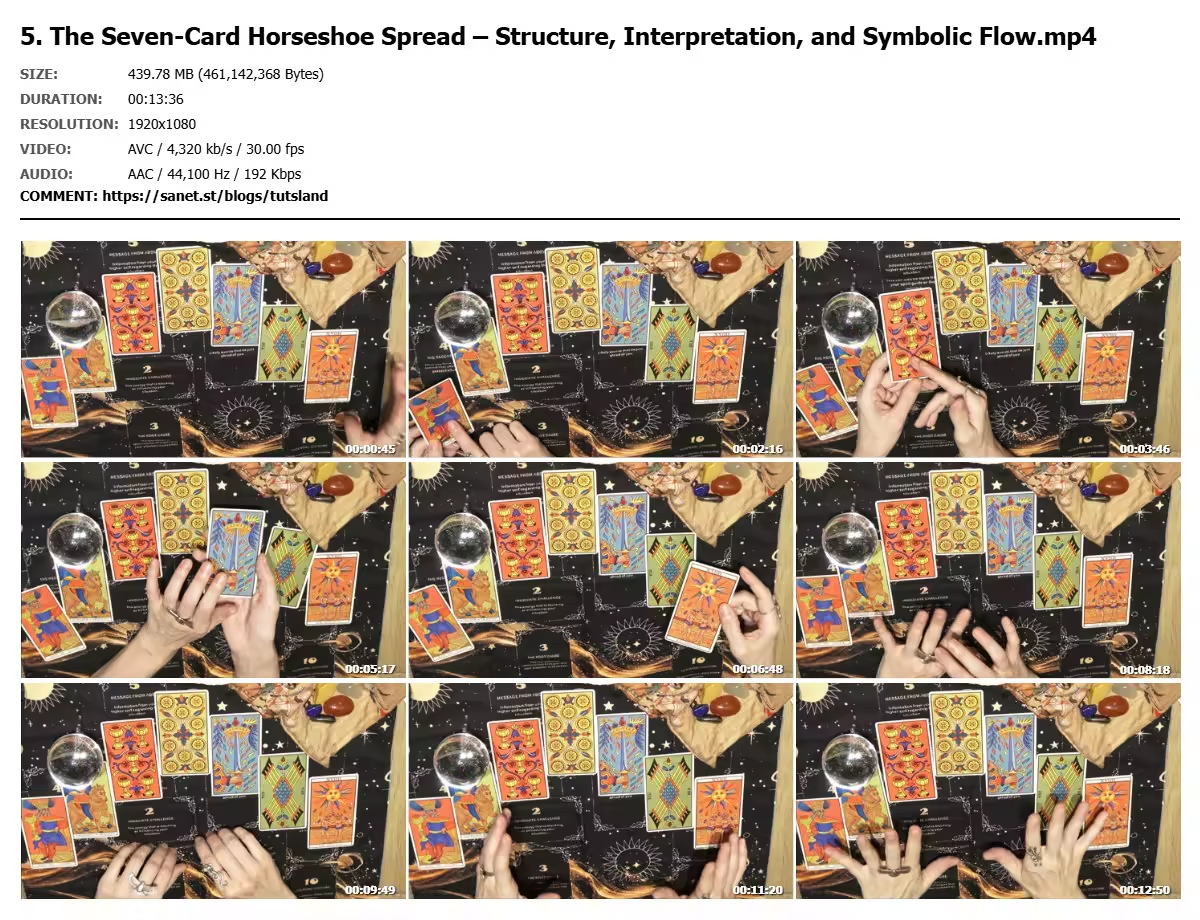
Practical application is addressed through detailed instruction on tarot spreads and reading methodologies. Students will learn a variety of layouts, ranging from simple foundational spreads to more complex multi-card arrangements designed to explore relationships, decision-making processes, personal development themes, and situational analysis. Emphasis is placed on understanding positional meanings, narrative flow within spreads, and techniques for synthesizing multiple symbolic elements into clear and structured readings.
In addition to technical skills, the course examines interpretative strategies and communication techniques, helping students develop clarity, consistency, and confidence in their readings. Ethical considerations, responsible use of symbolic interpretation, and critical thinking are incorporated to support balanced and professional practice. The course encourages students to cultivate observational precision, interpretative discipline, and methodological flexibility.
Throughout the course, students will be introduced to comparative analysis between different tarot traditions and related card systems, enabling them to understand how symbolic variations influence interpretative outcomes. The course promotes both structured learning and intuitive development, ensuring that students acquire a balanced approach grounded in knowledge, practice, and analytical reasoning.
By the conclusion of the course, participants will possess a comprehensive understanding of tarot history, symbolic structure, deck variations, and interpretative techniques. They will be equipped to conduct thoughtful, well-structured readings and to continue exploring tarot as a sophisticated symbolic system with historical depth and interpretative richness.
Who this course is for
Beginners interested in learning tarot from historical, symbolic, and practical perspectives.
Intermediate tarot readers seeking structured and deeper interpretative techniques.
Individuals interested in symbolism, archetypes, and visual storytelling systems.
People interested in personal reflection, self-discovery, and psychological symbolism tools.
Spiritual or esoteric learners wanting structured tarot education.
Content creators, writers, or educators seeking knowledge of tarot symbolism.
Coaches or guidance practitioners exploring symbolic interpretation methods.
Collectors or enthusiasts wanting to understand differences between tarot deck systems.
Anyone curious about tarot who wants a structured and comprehensive learning program.
Quick check before we show the links
Helps us keep automated scrapers from hammering the filehosts.