Psychology Of Parenting A Teen: Stop Parenting On Autopilot

MP4 | Video: h264, 1920x1080 | Audio: AAC, 44.1 KHz
Language: English | Size: 404.93 MB | Duration: 0h 40m
Discover Your Style, Understand Your Patterns, and Parent Your Teen with Intention
What you'll learn
Identify - if you instinctively parent as a Tiger (control), Elephant (rescue), Jellyfish (avoid), or Dolphin (balance)
Understand - how each style clashes (or aligns) with adolescent brain development and the teen's natural drive for autonomy
Apply - Dolphin Framework to real parenting situations using practical structure + flexibility + communication
Distinguish between parenting from fear vs. parenting from intention — catch themselves before reacting on autopilot and choose intentional responses
Requirements
The only requirement here is to be a parent ready to make some powerful shifts!
Description
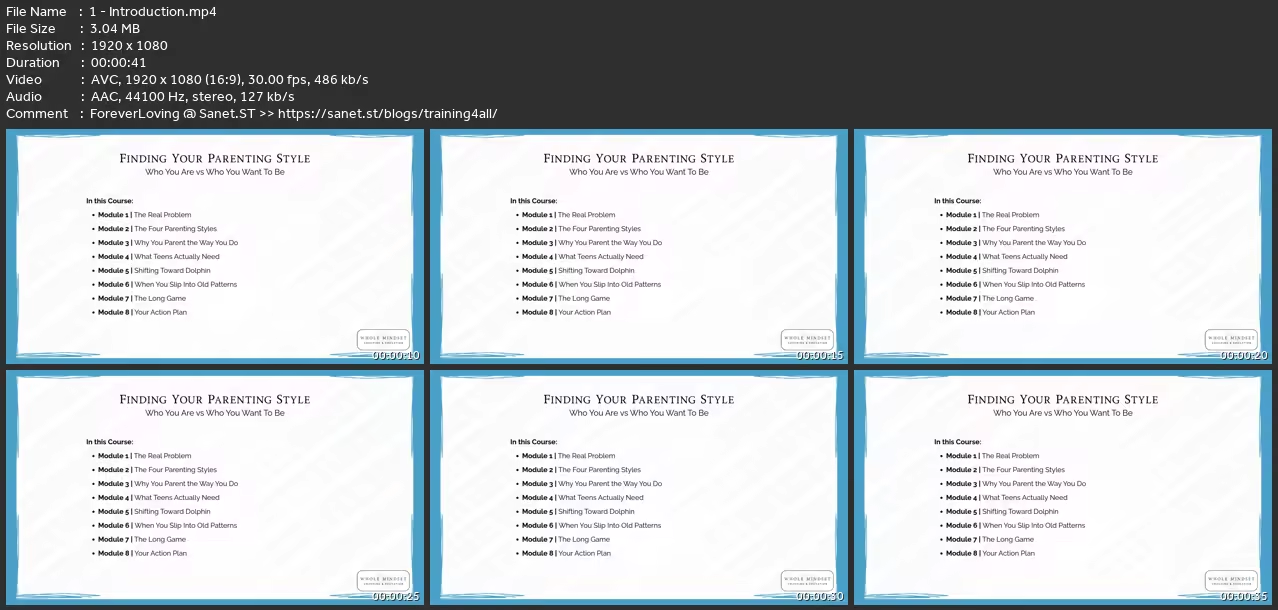
Most parents don't consciously choose a parenting style — they react. When your teen pushes back, shuts down, or argues, you default to autopilot: clamping down with control, rushing in to rescue, or backing off to avoid the fight. This course helps you understand why that happens, identify your default patterns, and make intentional shifts toward the balanced approach that actually works with teens.Discover Your Parenting Style and Start Raising Your Teen with IntentionIdentify your default parenting style — Tiger, Elephant, Jellyfish, or DolphinUnderstand the childhood patterns and fears driving your reactionsRecognize how your approach is affecting your teen's developmentApply the Dolphin Framework to real parenting situationsUse style-specific scripts to respond intentionally instead of reactivelyRepair quickly when you slip back into old habitsThis course gives you the self-awareness and practical tools to stop parenting on autopilot.Parenting a teenager is fundamentally different from parenting a younger child. Your teen's brain is wired to resist control, test limits, and push for independence — and the approaches that worked at 8 often backfire at 15. Understanding the psychology behind both your teen's behavior and your own reactions is the missing piece most parenting advice skips entirely.In this course, you'll learn the four parenting archetypes used by researchers and family therapists — Tiger (control), Elephant (rescue), Jellyfish (avoid), and Dolphin (balanced) — and discover which one you default to under pressure. You'll explore the childhood experiences and fears that shaped your style, understand why certain approaches clash with teen brain development, and learn exactly how to shift toward the Dolphin Framework: the balanced approach that combines structure, flexibility, and open communication.This course includes a parenting style self-assessment, style-specific scripts for common teen conflict scenarios, repair strategies for when you slip, and reflection prompts you can return to anytime. Each module builds on the last, moving you from awareness to understanding to practical action. By the end, you'll feel less reactive, more grounded, and genuinely clearer on the parent you want to be — and how to get there.You're not broken. Your parenting style isn't "bad." You're just ready to parent on purpose instead of autopilot.Disclosure: This course was created with the assistance of artificial intelligence tools in the development of course materials, including slides and worksheets.
This course is designed for parents and caregivers of tweens and teens (ages 10–18) who feel like what used to work just... doesn't anymore. You're the right fit for this course if: You've noticed you're reacting more than responding — clamping down, over-rescuing, or backing off — and you're not sure why You grew up with a strong parenting model (positive or negative) and you wonder how much of it you're unconsciously repeating You want a better relationship with your teen but feel stuck in patterns that create more conflict than connection You're curious about parenting styles but want practical tools, not just theory You're a co-parent navigating different parenting approaches and need a shared framework to reduce conflict This course is especially valuable for parents who would describe their teen as strong-willed, emotionally intense, withdrawn, or "impossible to reach" — because those dynamics are often a direct signal that your current default style isn't matching what your teen needs right now. No prior knowledge needed. You don't need to have read any parenting books or know anything about parenting frameworks. All you need is a willingness to look honestly at your patterns and a desire to show up more intentionally for your teen.
Quick check before we show the links
Helps us keep automated scrapers from hammering the filehosts.