Pipe/Line Sizing For Chemical Process Engineers
This post was published 3 years ago. Download links are most likely obsolete. If that's the case, try asking the uploader to re-upload.
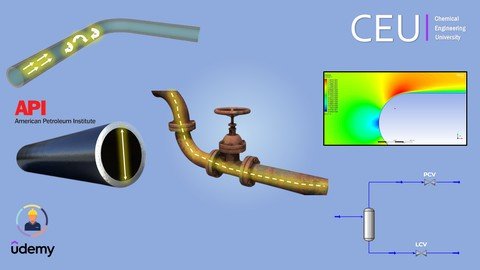
Published 3/2023
MP4 | Video: h264, 1280x720 | Audio: AAC, 44.1 KHz
Language: English | Size: 964.51 MB | Duration: 2h 6m
The only course with the best background knowledge and practical sizing calculations considering liquid and gas flows
What you'll learn
The difference between shear stress and pressure
Essential parameters of fluid flow (flow rate, velocity, pressure drop, etc.)
Average velocity importance and calculation
Calculation of gas density at different operating conditions
The difference between actual and standard flow rates based on the real gas considerations
How to determine friction factor through a pipe in a modern way
Pressure drop calculation via the pipe
How to calculate erosional-limit velocity for the pipeline
How to consider pressure drop criteria for line sizing
How to perform line sizing considering above points
Requirements
Theory, background and practical sides of fluid flow are discussed here. No requirements for all levels of learners.
Description
One regular factor in flow rate design is the calculation of pipe size. To diminish capital cost, some engineers may decrease the pipe size and increase the velocity.Optimizing the pipe size and velocity of the fluid not only improves the system efficiency but can also increase the service life. Some of the issues faced during increased velocity and undersized piping:High velocity in pipelines promotes corrosion/pitting; piping may be repaired or replaced sooner than expected.Abrasives and Erosion can cause premature failureSurge pressures due to water hammer cause more damages at higher speed.This course is mainly focused on pipeline sizing considering velocity and pressure drop criteria. However, before directly getting into this, some background information is desired to be provided. Course was taught by Process Engineer working in oil and gas field to the group of bachelor and master students. The main aspects discussed via the course are:Fluid flow essentialsShear stressPrimary parameters for fluid flowSignificance of average velocity in calculationsViscosityFluid flow typesFlow regimes and Reynolds numberDifference between gas and liquid flowContinuity equation for fluid flowCalculation of density for gasesStandard vs actual flow ratesDetermination of friction factor through a pipeLine sizing performed on a real case problemAbove points have clearly been discussed during the course. This training can be really helpful for students, engineers and even teachers aiming to deliver line sizing essentials from engineering point of view. By spending only 2 hours, you can really understand the whole topic and further do practical calculations. Course instructor does also provide the service of answering questions for all course participants for free.
Overview
Section 1: Introduction
Lecture 1 Fluid Flow Essentials - The State of Matter
Lecture 2 Fluid Flow Essentials - Driving Force for Fluid Flow
Lecture 3 Fluid Flow Essentials - Shear Stress
Lecture 4 Fluid Flow Parameters - Flow Rate
Lecture 5 Fluid Flow Parameters - Average Velocity
Lecture 6 Fluid Flow Parameters - Viscosity
Lecture 7 Fluid Flow Parameters - Types of Viscosity
Lecture 8 Fluid Flow Types
Lecture 9 Flow Regimes and Reynolds Number
Lecture 10 Difference between Gas and Liquid Flow
Lecture 11 Continuity Equation for Gas and Liquid Flow
Lecture 12 Theory: Calculation of Density for Gases
Lecture 13 Practice: Calculation of Density for Gases - Part 1
Lecture 14 Practice: Calculation of Density for Gases - Part 2
Lecture 15 Theory: Standard vs Actual Flow Rates
Lecture 16 Practice: Standard vs Actual Flow Rates - Part 1
Lecture 17 Practice: Standard vs Actual Flow Rates - Part 2
Lecture 18 Determination of Friction Factor through a Pipe
Lecture 19 Pressure Drop Calculation for Gas Lines
Lecture 20 Pressure Drop Calculation for Liquid Lines
Lecture 21 Real Case Line Sizing: Problem Description
Lecture 22 Real Case Line Sizing: Determination of Erosional Velocity
Lecture 23 Performing Line Sizing
Chemical Process Engineering Graduates or Undergraduates,Chemical Engineers,Process Engineers,Any Discipline Engineers aiming to learn essentials of pipe sizing
Screenshots

Homepage
without You and Your Support We Can’t Continue
Thanks for Buying Premium From My Links for Support
Click >>here & Visit My Blog Daily for More Udemy Tutorial. If You Need Update or Links Dead Don't Wait Just Pm Me or Leave Comment at This Post
Quick check before we show the links
Helps us keep automated scrapers from hammering the filehosts.